Tire Explosion Causes Life Threatening Injuries
Hazard Alert
| Topic: Tire Explosion Causes Life Threatening Injuries |
| Date Issued: March 22, 2012 |
Date Revised: October 6, 2026 |
During a pre-trip check, a truck driver found three underinflated tires. After inflating the third tire from 30 psi to 90 psi, it blew off the trailer and struck his legs. He suffered soft-tissue injuries to his legs and injuries to his back.
In a separate incident, a worker removed a wheel from a loader and noticed the lock ring wasn’t seated properly, so he wheeled the tire to a stand to deflate it. While placing the tire against the stand, it slipped, hit the floor with the lock ring facing downward, and exploded. The worker was struck in the face with dirt from the tire rim.
WHY IT MATTERS
Tire explosions and multi-part rim failures can cause serious or fatal injuries. The two main hazards are zipper ruptures in the tire sidewall and blow-offs. A blow-off occurs when a tire lock ring, rim or flange suddenly and violently separates from the tire assembly. These incidents usually occur during inflation.
Preventive measures
Before removing or dismantling an assembly
- Never reinflate a tire that has been operated while flat or underinflated at 80% or less of its recommended pressure.
- Completely deflate the assembly before removing wheel nuts or dismantling components. Remove the valve core and insert a wire into the valve stem to confirm it is clear.
- Completely deflate a damaged tire before removing the wheel assembly, even if the tire and rim will be discarded together. Treat sidewall bulges, tread separation, cracks and other signs of deterioration as indications of possible failure.
Inspect and prepare components
- Demount and inspect every tire and rim part. Match all components before reassembly and never use a rim part that cannot be identified.
- Replace cracked, rusted, worn or corroded rim parts. Never repair, modify or weld wheel, tire or rim components, and never apply heat to a multi-piece rim or wheel.
- Never hammer, heat, strike or force components together while an assembly is inflated or partially inflated. If the components do not fit, completely deflate the assembly, then inspect the components and rim gutter for damage, rust or foreign material.
Inflate safely
- Ensure every rim component is properly seated before adding inflation pressure. Never exceed 35 psi when seating the bead.
- When rounding out a tube or seating a side ring or lock ring without a restraining device, never exceed 3 psi. Further inflation could cause an explosive separation.
- Use a remote clip-on air chuck with an in-line pressure gauge or preset regulator. Use enough air line to remain outside the trajectory zone and never leave an air line unattended while inflating a tire.
- Inflate the tire inside a secured tire cage, inflation chamber, tire bag or other suitable restraining device. Secure the device so it cannot become a projectile. Never overload or overinflate a tire.
After inflation
- Keep the tire inside the restraining device while inspecting the tire and wheel. Confirm every component is properly seated and locked.
- Completely deflate the tire by removing the valve core before making any adjustments.
THE BOTTOM LINE
Completely deflate damaged or suspect tire and rim assemblies before handling. Use a safety cage or other restraining device and take appropriate precautions to protect employees from tire explosion hazards.
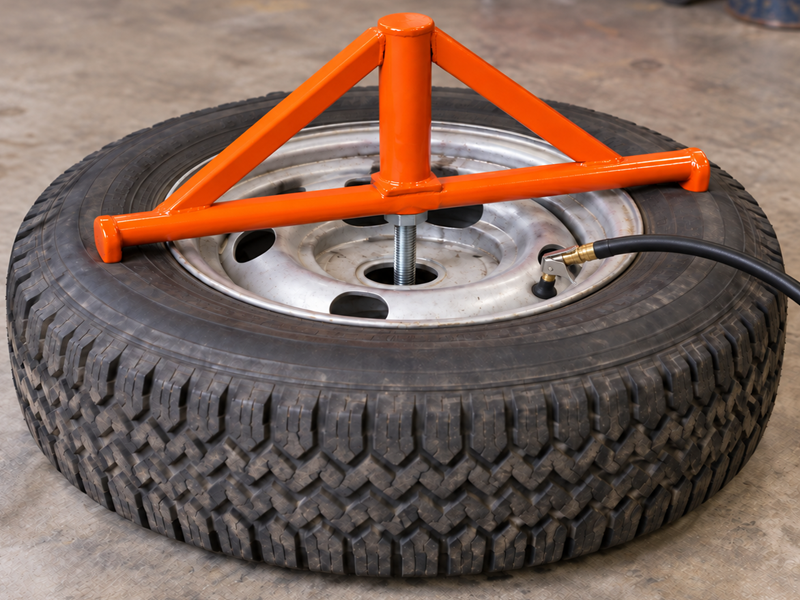
T-Bar
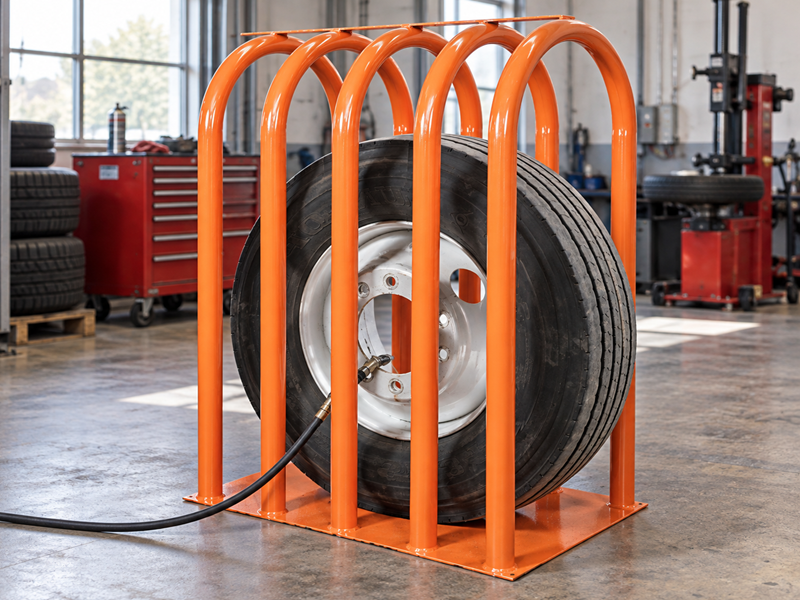
Tire Cage
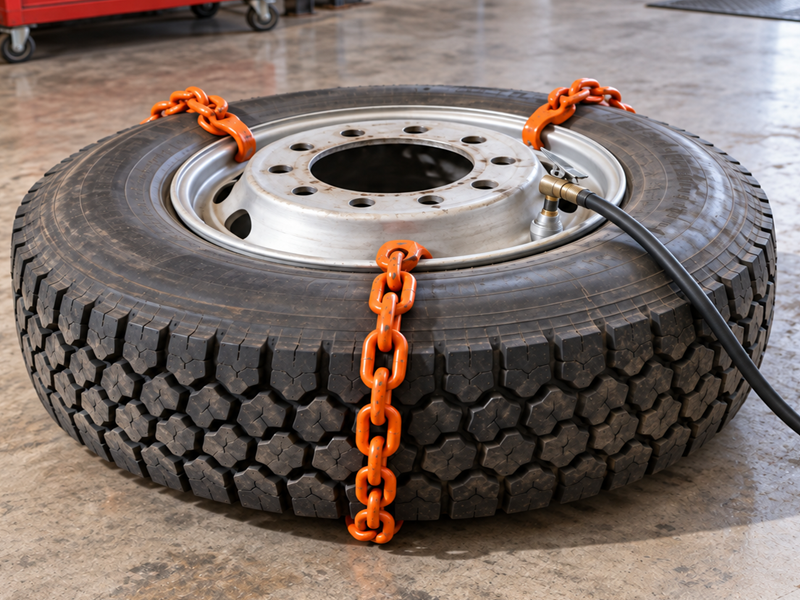
Chains