
| Topic: Stairways – Strength | Issued by: Chief Compliance Officer |
| Statute: General Regulation 91-191 | Date Issued: January 9, 2026 |
| Section: 115(1)(a) | Date Revised: |
Question
What are the strength requirements when building stairways?
Answer
As per paragraph 115(1)(a) of the General Regulation 91-191, stairways must be able to sustain a live load of 4.8 kPa. However, the National Building Code of Canada – 2020 (NBC) has two sets of design specifications for strength and rigidity under uniform loading:
To align with NBC requirements, employers can design stairs that meet a specified load of 1.9 kPa, provided the stairs are intended for its corresponding application, as listed above.
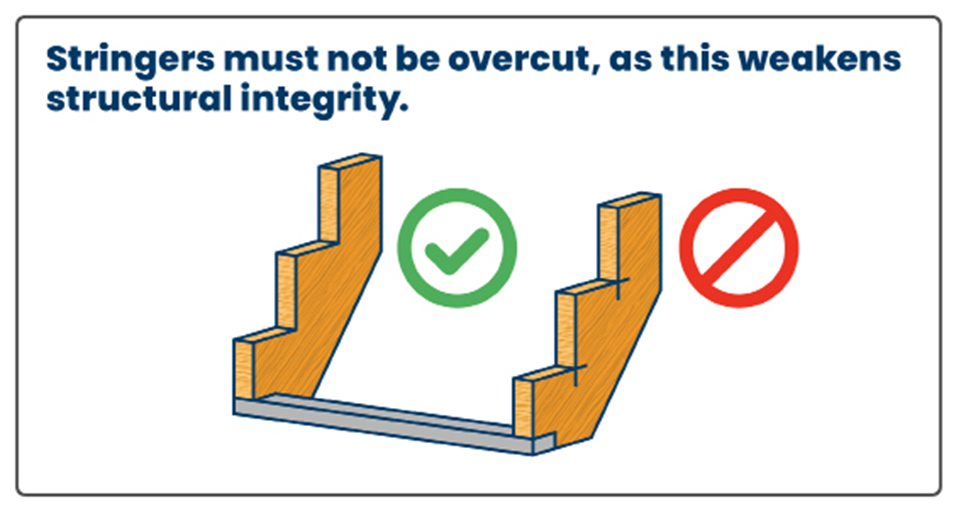
Many conditions must be satisfied to ensure stairways are NBC-compliant. See illustrations below that visually demonstrate the specific NBC criteria for wooden stairs.
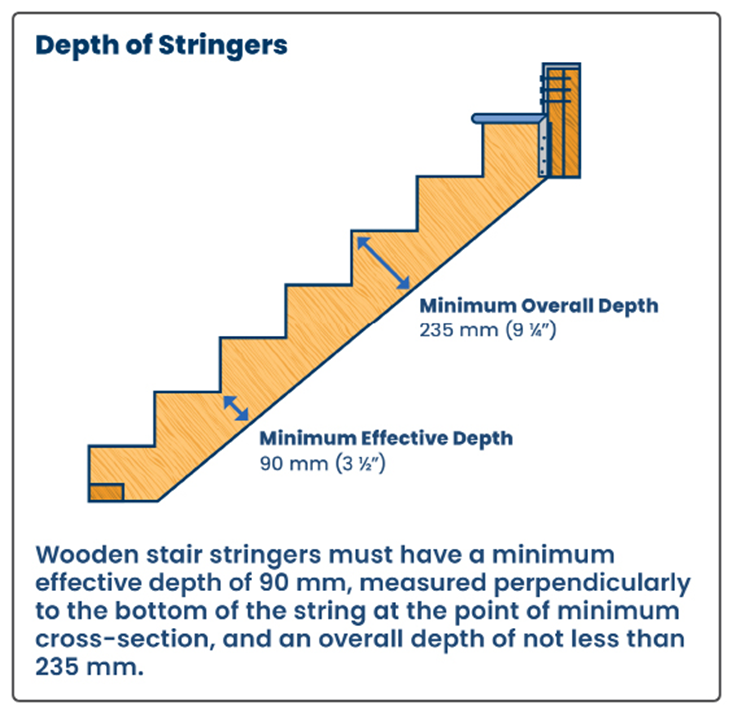
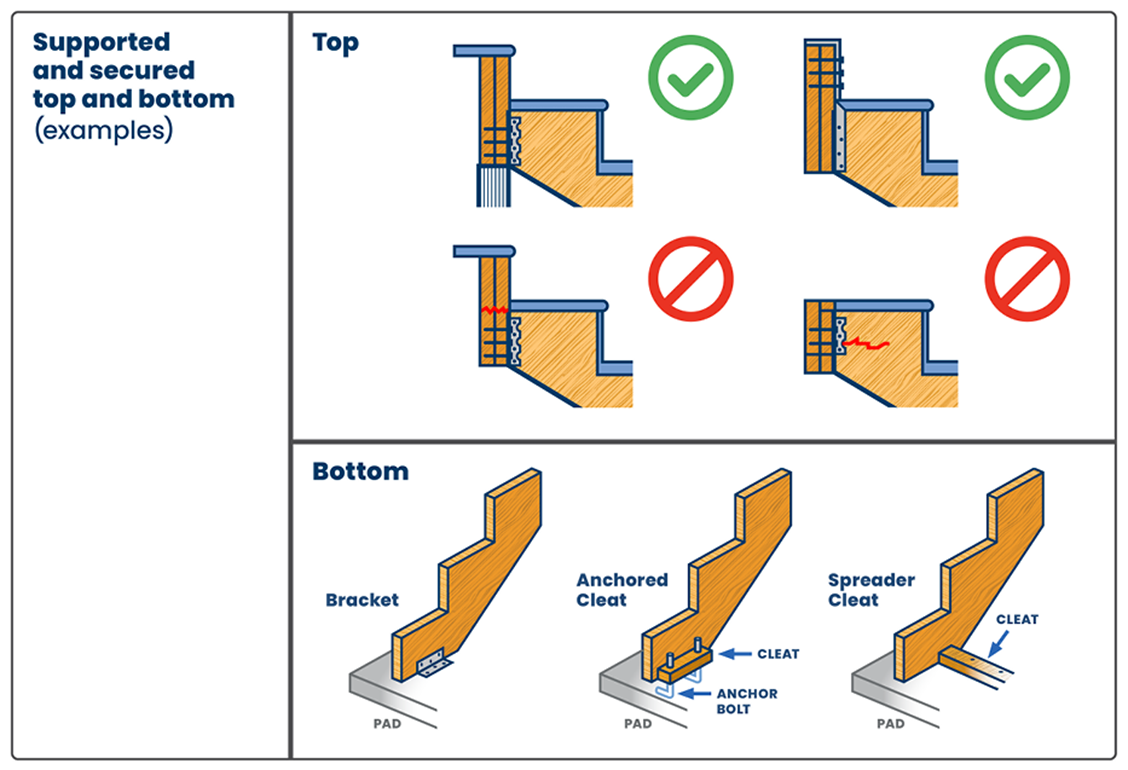
The red fracture lines shown are for illustrative purposes only and indicate potential locations where failure may occur.
Supported – The stringer must be structurally supported at both the top and bottom. The bottom of the stringer must sit on, and be fastened to, a floor, landing, or slab. At the top it should either sit on a ribbon board attached to the floor system or landing. Alternatively, a suitable engineered hanger would be acceptable.
Secured – The stringer must resist rotation (especially important for open riser stairs). Blocking between stringers may be used to prevent movement.
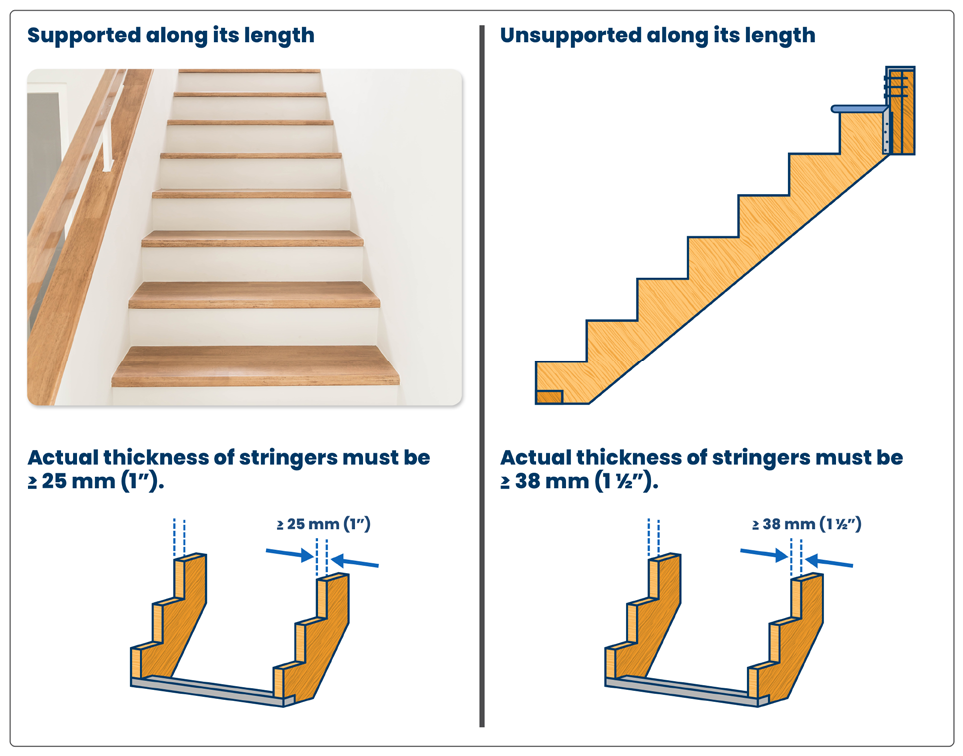
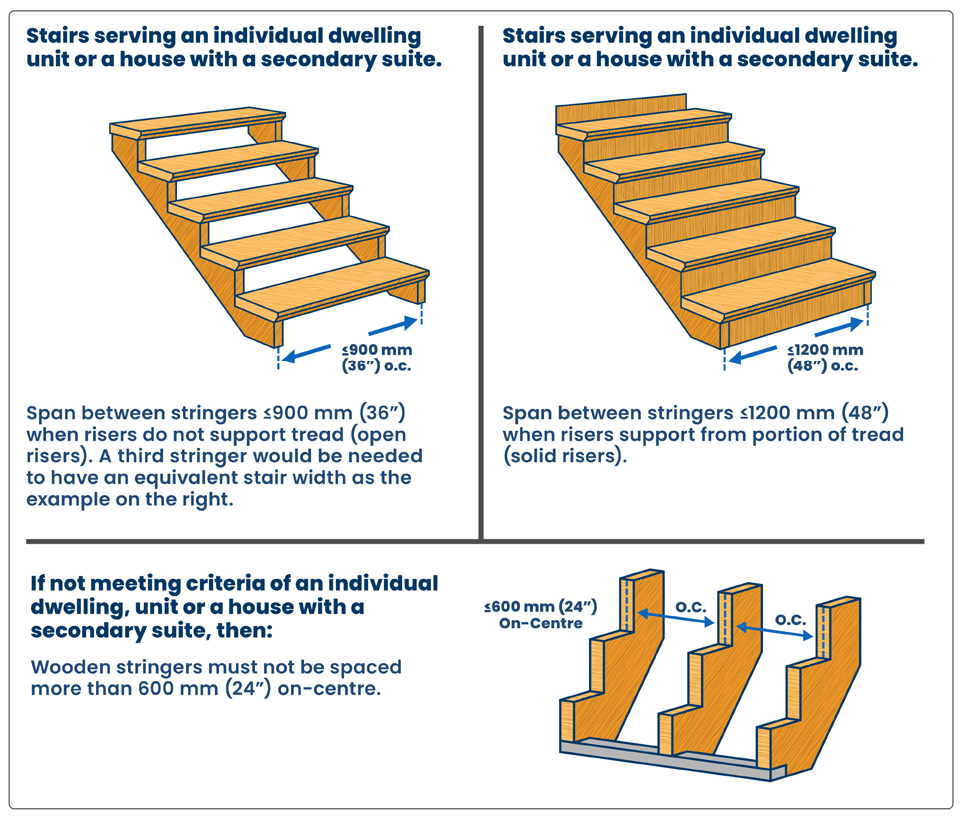
All measurements are nominal sizes.
Stair treads of lumber, plywood or OSB
Stair treads of plywood or OSB, not continuously supported by the riser:
Definitions from the NBC:
115(1)(a) An employer shall ensure that a stairway is of sufficient strength to sustain a live load of 4.8 kPa.