
Employers must ensure that supervisors are competent through training and/or experience for the work they supervise. This means having the necessary knowledge of the work being carried out, including the potential work hazards, preventive measures for those hazards and the legislation pertaining to that work. Because competency is dependant on the work being supervised, there is no one course that supervisors can take to meet the competency requirements. They can acquire some knowledge by completing courses provided online by WorkSafeNB, through external training providers or in-house. Some of the knowledge the supervisors need to safely direct the work is workplace specific, including knowledge of work processes, policies, procedures, programs and required PPE.
A supervisor can be either. The OHS Act requires that a committee consist of equal representation from both the employer and the employees, and that the employer designate their representative or representatives and the employees do the same. In most cases, an employer designates a supervisor to represent the employer. However, if a supervisor is designated by the employees to be their representative, the supervisor can represent the employees on the committee.
As an employee you should first discuss your concerns with your supervisor. While this can be a difficult conversation, particularly if the issue pertains to your supervisor, it is an important and necessary conversation. If discussions with your supervisor do not resolve the situation or you don’t feel comfortable bringing the issue(s) to your supervisor, you should bring your concern to the JHSC or the health and safety representative if you have one at your workplace. If you still have a concern regarding supervision after following these steps, or you don’t have a JHSC or H&S Rep, you can contact WorkSafeNB at 1 800 999-9775 for follow-up.
The short answer to your question is no. If you are using any of these types of PPE, they are still allowed to be used as long as they are properly maintained and in good condition to provide the protection they were originally designed for. However, when equipment needs to be replaced, any new equipment is required to meet the new standard.
Harmonization will simplify regulatory requirements for employers who operate in more than one Canadian province and avoid having to purchase new equipment to comply with another jurisdiction’s requirement for PPE. As enforcement of the harmonized PPE standards will vary across provinces, if you have workers using them in other provinces you may want to focus on updating the PPE of these workers first.
Yes, the new cited standards are available at no cost to view (read only) on the CSA website. A copy of the standard can be purchased from the same web page.
WorkSafeNB has developed a summary document that highlights key changes.
Anyone who wants to use PPE certified by an alternative standard setting agency other than CSA or other agencies cited in the regulations is responsible to confirm that the equipment provides equal or better protection. Determining equal or better protection may not be straight forward but a good place to start could be to ask the supplier or manufacturer. Contacting CSA or other standard setting agencies cited in the regulation may also provide the required information. If alternate PPE is used, the employers or users must be able to provide evidence that the equipment provides equal or better protection.
The only marking requirement for suppliers is to include the word “first aid” 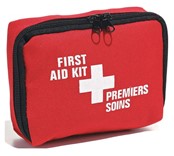 or the symbol for “first aid” on the first aid kit container. Unfortunately, this will not be enough to determine if the kit meets the CSA requirements. As a purchaser, you can ask for a CSA-compliant kit and if you are not sure it meets the regulation, compare its contents with the CSA standard requirements.
First Aid kits that meet the CSA standard are widely available from safety equipment suppliers, first aid training agencies and online.